
· by Michael Blair, Nashville's Roofers
Someone goes up to the attic for the holiday boxes, turns off the flashlight for a second and sees daylight. The first thought is a hole in the roof. Sometimes it is. Often it is a vent doing exactly what it was built to do.
An attic is supposed to breathe, so a roof has openings in it by design: at the eaves, sometimes at the gable ends, and along the peak. The question is never whether there is light in the attic. It is where the light is, what shape it is, and what is next to it.
Is it normal to see light at the peak of the attic?
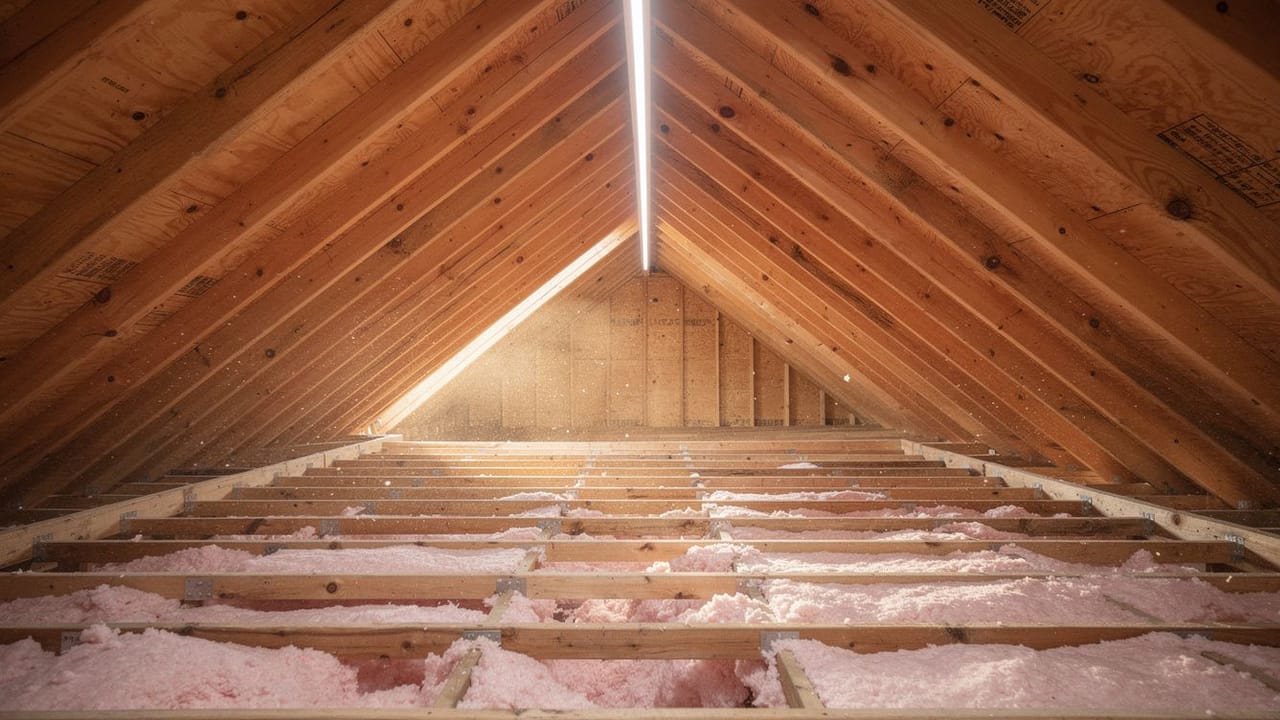
A narrow line of light along the peak is normal when the roof has a ridge vent, because the vent sits over a slot cut through the decking on purpose. Owens Corning’s installation instructions for its VentSure RidgeCat ridge vent call for a slot 2 inches wide in all at the ridge of a truss roof, an inch to either side of the peak, with the saw set to cut the decking only and never the framing. The cut starts and stops 6 inches in from the rake edges, and the vent is centered over the opening.
The Department of Energy’s Building America Solution Center describes a continuous ridge vent the same way in its guide to roof vents: it runs the length of the ridge and is hidden under ridge shingles. So from the attic you see light through the slot, while from the street you see an ordinary ridge.
What a vent slot looks like is the giveaway. It is straight, even in width, centered on the peak, and it stops a short distance from each end. Light that is ragged, that widens in one spot, or that runs to the very end of the ridge is worth a closer look from the outside.
Where else does light get into an attic on purpose?
The soffits and gable vents are the other places light gets in on purpose. The same roof vent guide explains that soffit vents along the eaves supply air to the attic while the upper vents exhaust it, so a glow along the bottom edge of the roof, low where the rafters meet the walls, is usually the intake side of the system. The guide recommends mesh screening of 1/8 inch or smaller at soffit openings, which is why that light often looks filtered rather than open.
A gable vent in the end wall lets light in as well. The guide warns against pairing gable vents with a ridge vent, because air takes the short route between them and the soffits stop doing their part. If you see light at both the ridge and the gable ends, that is not a leak, but it is worth reading our post on attic ventilation in Nashville before the next reroof.
When is daylight in the attic a problem?
Daylight is a problem anywhere the roof is supposed to be sealed: around a chimney, a plumbing pipe or an exhaust vent, in a valley, where a roof meets a wall, or through the decking partway down a slope. Water gets through any gap daylight can, especially in wind-driven rain.
Those are the places flashing belongs. The Solution Center’s homeowner guide to missing roof and wall flashing lists them: step flashing, a sloped cricket on the uphill side and counterflashing into the mortar joints at a chimney; boot or collar flashing at pipes that laps into the shingles like a shingle itself; self-adhered membrane in valleys, which most codes now require; and step flashing where a roof runs into a wall. It warns that missing flashing can let water into the walls or roof and cause rot that stays hidden. It also suggests checking vent seals that rely on caulk about every two years.
Light through the decking in the open field of the roof, away from any vent or penetration, usually means shingles or decking are missing or damaged. After a windstorm, that is a call for storm damage repair before the next rain.
How to look, and what to tell us
Go up on a bright afternoon, step only on the joists or on boards laid across them, and give your eyes a minute in the dark. Then switch the flashlight off and look along the peak, down at the eaves, and around every pipe, chimney and valley. Take a photo of anything you find with something recognizable in the frame, and note whether the wood around it is darkened, stained or soft. Dark wood next to the light is the strongest sign that water has been coming in, and our post on where roofs actually leak explains why the stain is not always under the opening.
Then we check it from the outside, where we can see whether a vent slot is properly covered, whether the flashing at a chimney or pipe is intact, and whether shingles are missing. Most of what turns up is a roof repair and not a new roof. We look at roofs across the area, including roofing in Brentwood. If you have found light you cannot explain, send us your photos and tell us where in the attic it is.
Sources
- Owens Corning, VentSure RidgeCat installation instructions — The ridge slot: 1 inch on each side of a truss ridge (2 inches total), saw set to cut the decking only, cut starting and stopping 6 inches in from the rake edges, vent centered over the slot.
- Building America Solution Center (U.S. DOE / PNNL), Roof Vents — Continuous ridge vent concealed by ridge shingles; soffit vents supply and upper vents exhaust; mesh of 1/8 inch or less at soffit openings; gable vents should not be combined with ridge vents.
- Building America Solution Center (U.S. DOE / PNNL), Look for Missing Roof and Wall Flashing — Flashing at chimneys (step, cricket, counterflashing), pipes (boot or collar), valleys (self-adhered membrane) and roof-wall joints; hidden rot from missing flashing; check caulked vent seals about every two years.
FAQ
Seeing Daylight in the Attic: What It Means — questions
Is it normal to see light through a ridge vent?
Yes. A ridge vent covers a slot cut through the decking at the peak; Owens Corning’s instructions call for 1 inch on each side of a truss ridge, stopping 6 inches short of the rake edges. A straight, even line of light along the peak that stops near each end is that slot.
Does light coming through the roof mean it leaks?
Not always. Light at the ridge vent, the soffits or a gable vent is ventilation. Light around a chimney, a pipe, a valley, a roof-to-wall joint, or through the decking partway down a slope is an opening that rain can use, and darkened wood beside it means water already has.
Should soffit vents have screens?
The Department of Energy’s Building America Solution Center recommends mesh screening at soffit vent openings, 1/8 inch or smaller, to help keep out insects and wind-blown embers. That screen is why light coming in low along the eaves often looks filtered from inside the attic.
Can I check my roof from the attic?
You can check part of it. On a sunny day, with the flashlight off, look for light and darkened wood around chimneys, pipes, valleys and wall joints, stepping only on joists. The flashing, the shingles and whether a vent slot is covered can only be judged from outside the roof.
How often should caulked pipe boots be checked?
The Building America Solution Center suggests checking roof vent seals that depend on caulk or roofing sealant about every two years, adding more as needed. Boot or collar flashing that laps into the shingles like a shingle itself does not depend on caulk alone.