
· by Michael Blair, Nashville's Roofers
When a limb comes through the decking or a gust peels shingles off a slope, the roof has to be closed before the next rain, and the usual answer is a tarp. Most tarps that fail were simply laid over the damage and weighted down or tacked at the corners, and the first wind lifts them. This is how a roof tarp is fastened so it stays put, what federal guidance says about climbing up to do it yourself, and how the tarp fits into the insurance claim and the hiring that follows. It is the first step of what we do on storm-damaged roofs.
What is an emergency roof tarp for?
An emergency tarp is there to keep water out of the house until the roof can be inspected and properly repaired, nothing more. The Department of Energy’s Building America Solution Center, in its guidance on installing roof, window and door tarps, describes tarps, plastic sheeting and housewrap as temporary barriers that can keep the elements from doing further damage. Every hour rain runs through an opening, it soaks decking, insulation and drywall that were fine when the storm passed.
Tennessee asks the same of a homeowner. The Department of Commerce and Insurance’s 2018 consumer tips for recovering from severe weather damage tell people to make the repairs needed to prevent further damage, and name leaking roofs among the examples. A tarp is that repair on a roof. It is also reversible, which matters later: it can be pulled back for an inspection, and the damage underneath is still there to be seen.
Not every storm problem needs one. The same federal guidance notes that where damage is minimal, roofing cement or a patch product may be enough to seal down loose shingles and flashing. A missing tab or two is a roof repair that can wait for a dry day; an open hole, a missing section of shingles or a crushed area of decking is a tarp.
How is a roof tarp fastened so it holds in wind?
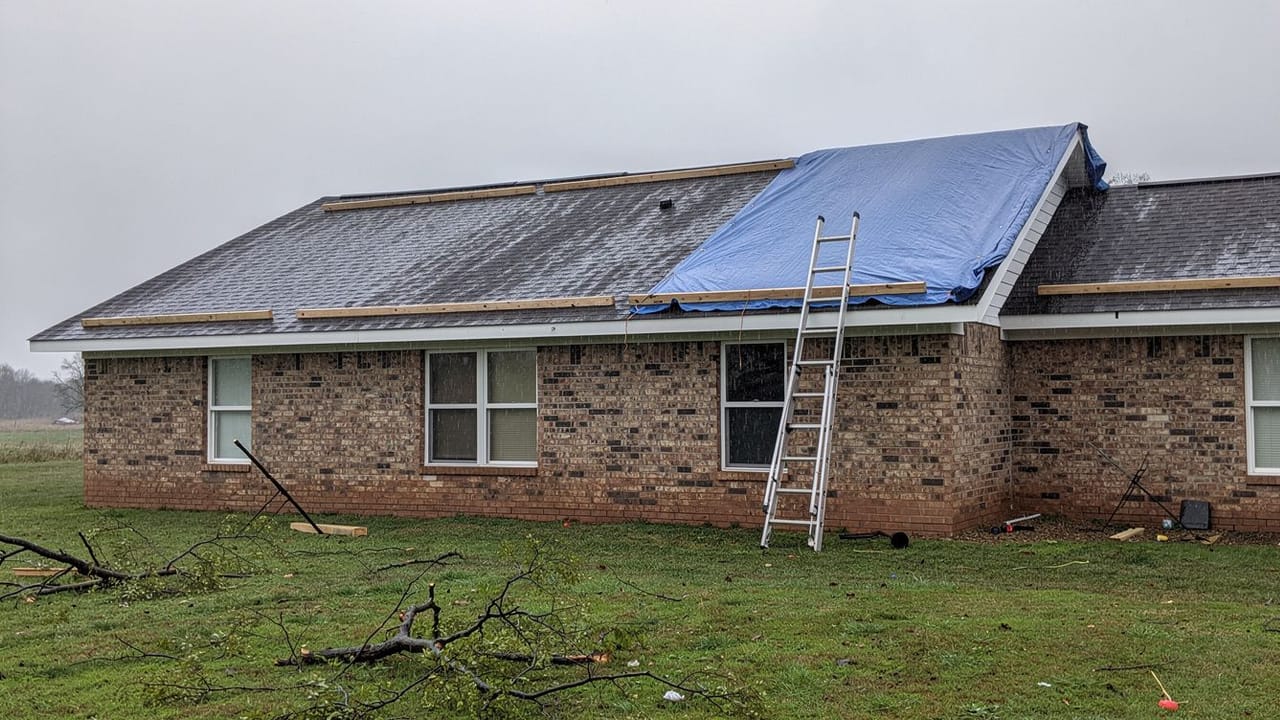
A tarp holds when the wind cannot get under any edge of it. The federal guidance lays out the method. Wait until the roof is dry and it is not raining. Clear the debris off the slope, then find where the water is getting in: the broken or missing shingles or panels. Unroll the tarp over the damaged area so that at least a foot of it laps over the peak, which keeps water running down the far slope from getting under the top edge.
The fastening is what most quick jobs skip. The top end of the tarp is wrapped around a board, and the board and tarp together are screwed to the roof. More boards go along the side edges so the tarp cannot fly up in wind or rain. The lower end is wrapped around a 2x4 that is screwed to the underside of the house at the eave. Wrapping the tarp around lumber spreads the hold along the whole edge instead of at a few holes that tear out. Skylights, vents and other openings in the damaged area simply go under the tarp.
Because water travels before it shows, the tarp has to cover where the roof is actually open, not just the stain on the ceiling. We wrote about where that usually is in where roofs actually leak, and a tarp sized only to the ceiling spot can leave the real opening uncovered.
- A dry roof, and no rain falling
- Debris cleared and the opening found
- At least a foot of tarp lapped over the peak
- Top and side edges wrapped around boards screwed to the roof
- The low end wrapped around a 2x4 screwed under the eave
Should you put the tarp up yourself?
If you can avoid it, no. The federal guidance says plainly that installing temporary weather barriers by yourself can be dangerous and that you should try to arrange a professional installation if possible. A roof just after a storm is often wet, littered with loose granules and branches, and partly torn up, which is the worst footing it will ever offer.
For anyone who does go up, the same guidance sets the minimum: work with a partner, foot the ladder on level or nearly level ground and secure it at the base, keep three points of contact while climbing, wear a hardhat, and use a full body harness or another safe method on steep slopes. A tarp is light until the wind catches it, and on a ladder that is enough to pull someone off balance.
There is also the matter of the screws. Fastening boards through the tarp puts holes in the roof outside the damaged area, which is accepted practice for a temporary cover, and those holes get dealt with when the permanent repair is done. That is one more reason the tarp should be followed by a proper storm damage repair rather than left in place for a season.
What does the tarp mean for your insurance claim?
It means a receipt to keep and a roof to leave as it is until the insurer has seen it. The 2018 Tennessee tips say to save every receipt, including those for temporary repairs covered by your policy, and not to have permanent repairs made until the insurance company has inspected. Whether the tarp is paid for depends on your policy, so the receipt goes in the claim file either way. Before the tarp goes on, photograph the opening, the slope and any damage inside, since the cover hides what an adjuster needs to see.
What happens at that inspection, and what a roofer can and cannot do there, we covered in the roofer and the claims adjuster on your roof. The tarp buys time for that visit; it is not a reason to rush the permanent work.
The hiring rules start with the tarp, too, because storm season brings contractors to the door. The 2018 tips say to get several bids and check references before committing. The department’s 2017 tips on filing claims and selecting contractors add to get at least three bids, to confirm the contractor is properly licensed to work in Tennessee, and never to pay more than one-third down or let payments get ahead of the work. Our post on what licensed and insured means for a Tennessee roofer shows how to check a license. If your roof is open now, tell us what happened and where the water is coming in, and we will look at the job and put a proper cover on it until it can be repaired.
Sources
- Building America Solution Center (Pacific Northwest National Laboratory, US Department of Energy), Flooded Homes: Installing Roof, Window, and Door Tarps (transcript, undated; checked October 19, 2026) — Tarps as temporary barriers; roofing cement for minimal damage; self-installation is dangerous; ladder, partner, hardhat and harness; the tarp method with a foot over the peak, boards and a 2x4 under the eave.
- Tennessee Department of Commerce and Insurance, TDCI Shares Consumer Tips for Recovering from Severe Weather Damage (November 6, 2018) — Make repairs to prevent further damage, including leaking roofs; save receipts for temporary repairs; no permanent repairs until the insurer inspects; several bids and references.
- Tennessee Department of Commerce and Insurance, TDCI Offers Tips for Filing Insurance Claims, Selecting Contractors (May 30, 2017) — At least three bids; a contractor properly licensed in Tennessee; no more than one-third down; payments not ahead of the work.
FAQ
Emergency Roof Tarps in Nashville: Doing It Right — questions
How do you tarp a roof after a storm?
Wait for a dry roof with no rain, clear the debris and find the opening. Lay the tarp over it with at least a foot lapped over the peak, wrap the top and side edges around boards screwed to the roof, and wrap the low end around a 2x4 screwed under the eave so wind cannot lift it.
Can I tarp my own roof?
You can, but federal guidance on temporary weather barriers calls doing it yourself dangerous and recommends a professional installation where possible. If you go up anyway, work with a partner, set the ladder on level ground and secure its base, keep three points of contact, wear a hardhat and use a harness on steep slopes.
Does homeowners insurance pay for roof tarping?
That depends on your policy. Tennessee’s Department of Commerce and Insurance tells homeowners to make the repairs needed to prevent further damage and to save every receipt, including those for temporary repairs the policy covers. Keep the tarp receipt with the claim and hold permanent repairs until the insurer has inspected the roof.
Should I tarp the roof or use roofing cement on missing shingles?
It depends on how much is open. Federal guidance says roofing cement or a patch product may seal down loose shingles and flashing where the damage is minimal. An open hole, a missing section of shingles or crushed decking needs a tarp fastened with boards until a permanent repair can be made.
What should I photograph before the roof is tarped?
Photograph the opening itself, the whole damaged slope, anything that fell on the roof and every water stain or wet area inside, before the tarp goes on. The cover hides what the insurance adjuster will need to see, and pictures taken first show the damage as the storm left it.